Sustainability in fashion is often used only as a statement without practicing the proper design and production processes and also no attention to ethical problems in the industry. To develop directive and innovative ways in creating a better future in fashion from the right professionals in the industry, the Slow Factory step in.
The One X One is a design initiative from Slow Factory Foundation and Swarovski launched in February this year, with support from the United Nations – addressing Circularity, Equity and Renewable Technology through the lens of design, timeless beauty and empathy.
The program was created to pair a scientist with a designer and support them in inventing a new way of creating, one that is Good for the Earth and Good for the People.
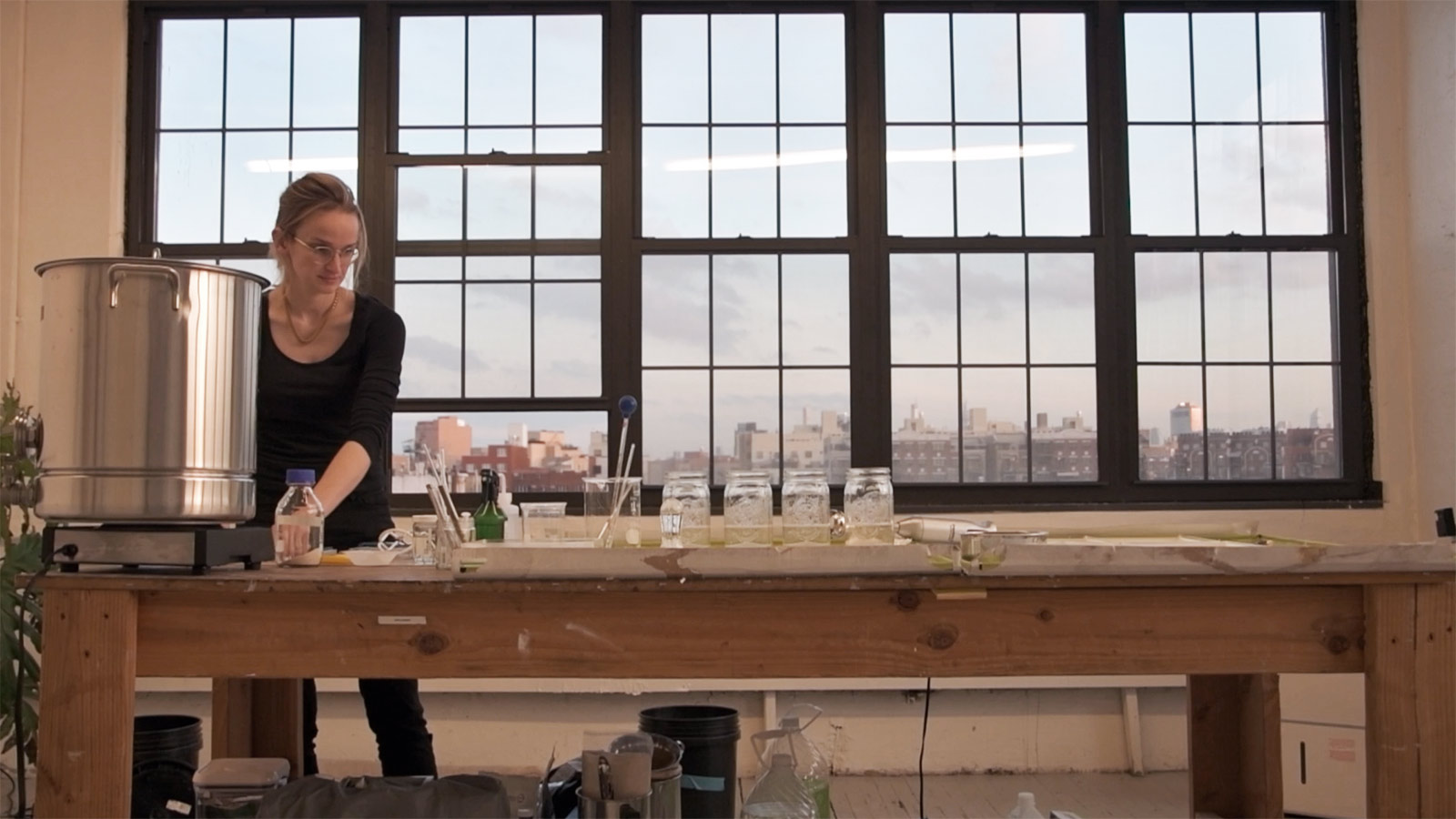
“I come from thinking about formal sustainability strategy, but then I realized that the real gap and the real challenge we had was in creating visions of workable, livable futures, so that we could have a collective vision we could pull towards as a society. That’s really creative work,” said Charlotte McCurdy in her studio in collaboration with fashion designer Phillip Lim in making the algae sequin dress. Image by the team of One X One Official Website.
The advisory board of One X One 2019-2020 is carefully curated to provide their participants the support to realize the visions on three levels: industry experts, scientists, academics. The three projects from the One X One Program are:…
1. CIRCULARITY
The duo designers Dao-Yi Chow and Maxwell Osborne of the street-savvy clothing line Public School who worked as creative directors of DKNY in 2015 – working with Dr. Theanne Schiros, an assistant professor at FIT and a research scientist at Columbia University – growing a zero-waste, low-carbon-footprint version of a Public School shoe out of fermented bacteria. This partnership aims to push forward the function and aesthetics of using waste as a regenerative resource.
The entire process is based on the lowest carbon and toxicity footprints possible. Detailed LCA (life cycle analysis) performed by Dr. Schiros show that this process is over 10,000 times lower human toxicity than chrome-tanned leather. “People think of sustainability as really limiting, but I see it as a place of joyful discovery and collaboration,” said Dr Theanne Schiros in One X One official website. For the project, she has turned her basement in Brooklyn as a lab where she grows a sneaker along with vegetables and marigold during the pandemic. And the tanning and dyeing process done in her backyard. “It’s that non-toxic,” she says during an interview with Vogue.
2. EQUITY-CENTERED DESIGN
Mara Hoffman partnered with Custom Collaborative founder Ngozi Okaro to develop advanced worker training programs for marginalized communities in New York city that focus on renewing garments.
According to the a fashion-industry trade journal WWD, the program provided women of the low-income and immigrant communities in New York city area the opportunity to have careers in fashion with paid and sustained work. “We see sustainability as something that has happened from the roots up, as opposed to the leaves down and sort of starting from this top level. We need to get to the root which start with grassroots and community level work, and that’s happening in tandem with the top level,” said Hoffman during the interview.
3. REGENERATIVE TECHNOLOGIES
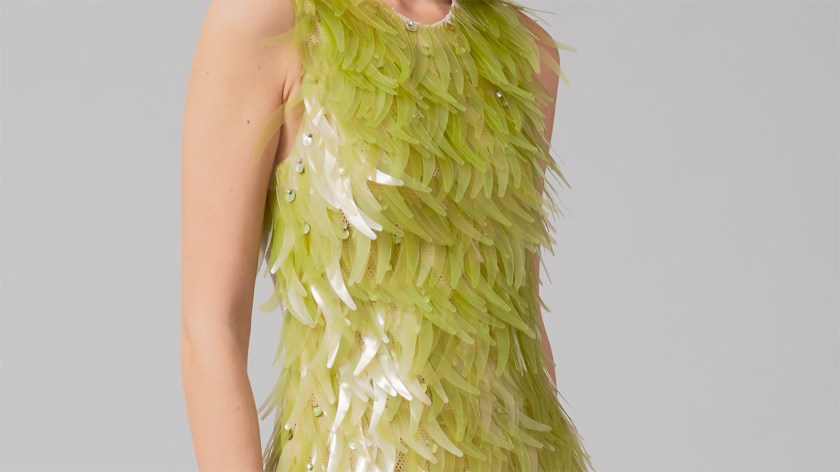
Phillip Lim, an American designer who worked with industrial designer Charlotte McCurdy develop a carbon-neutral dress, design inspired by the colors and movement of the sea, it made out of algae feather-like sequins. The piece is a total circular from a natural material and would go back into the earth when it’s discarded. McCurdy has been researching bio-plastic from algae as part of her involvement in the New Museum’s cultural incubator, NEW INC.
As a fashion designer Lim wanted to be a part of this project to normalize this type of technology for his customers. “When you see this dress in person, you will not even know it is seaweed,” he explained during a video chat with InStyle. “There’s no such thing as 100% sustainable fashion because if you exist, you already take up space,” Lim admits. “I really sincerely hope that the challenging times during the pandemic have helped brands get more of an understanding about who they are and what makes their customer happy. And from there, pursue that, not only in product but pursue that in a value system. Pursue that in community,” he added.
For more information about One X One program: Website onexone.earth.
Source: A Dress Made Out of Beautiful Green Algae — Growing Sequins and Sneakers in a Lab With Public School and Phillip Lim — This Phillip Lim Sequin Dress Is Made Out of Seaweed — ‘Introspection’ Is Key to Equitable Partnerships — BIOGRAPHY – Dao-Yi Chow & Maxwell Osborne CREATIVE DIRECTORS AND CO-FOUNDERS, PUBLIC SCHOOL
 MAAKNU